

Most people use software every day without ever asking what is actually happening under the hood. They open an app, click a button, and expect it to work. But behind every smooth experience is a process that took months of planning, hundreds of decisions, and a team that had to get things right before any user ever touched the product. That is exactly what this article is about. If you have been wondering how Mogothrow77 software is built, you are about to get a real answer. Not a surface-level overview. A clear, honest breakdown of every major phase that turns an idea into a working, scalable, and secure piece of software.
What Is Mogothrow77 and Why Does Its Build Process Matter
Before getting into the technical side, it helps to understand what this software is designed to do. Mogothrow77 is a modular platform built to handle complex digital workflows, system optimization tasks, and multi-platform integration without making things complicated for the end user.
The design goal was always simple on the surface, powerful underneath. Users get a clean interface. Behind that interface runs a system that can process high volumes of data, communicate between independent services, and recover from errors without crashing everything at once.
Understanding how Mogothrow77 software is built matters because the build process directly explains why the software performs the way it does. Every decision made during development, from choosing a programming language to deciding how data gets stored, shapes how stable and fast the final product feels to the person using it.
Phase One: Planning and Requirements Before a Line of Code
Nothing good gets built without a clear plan. The first phase of how Mogothrow77 software is built starts long before any developer opens their code editor.
Defining the Problem First
The team starts by identifying what the software needs to solve. Vague goals lead to wasted time and features nobody uses. So before anything else, specific goals get written down. What problems will this software fix. Who is going to use it. What does success actually look like.
For Mogothrow77 the core goals were three things. Automation of repetitive manual tasks. Scalability so the system can grow without needing a full rebuild. And stability across different environments and device types.
Research and Competitor Analysis
Once the goals are clear, the team studies what already exists. They look at what competing tools do well and where they fall short. This research shapes the feature list and helps the team avoid building something that already exists in a better form somewhere else.
Industry trends and user behavior data also feed into this phase. If a large percentage of users abandon a product because it loads too slowly, that becomes a hard performance benchmark the team must beat before launch.
Phase Two: Architecture Design
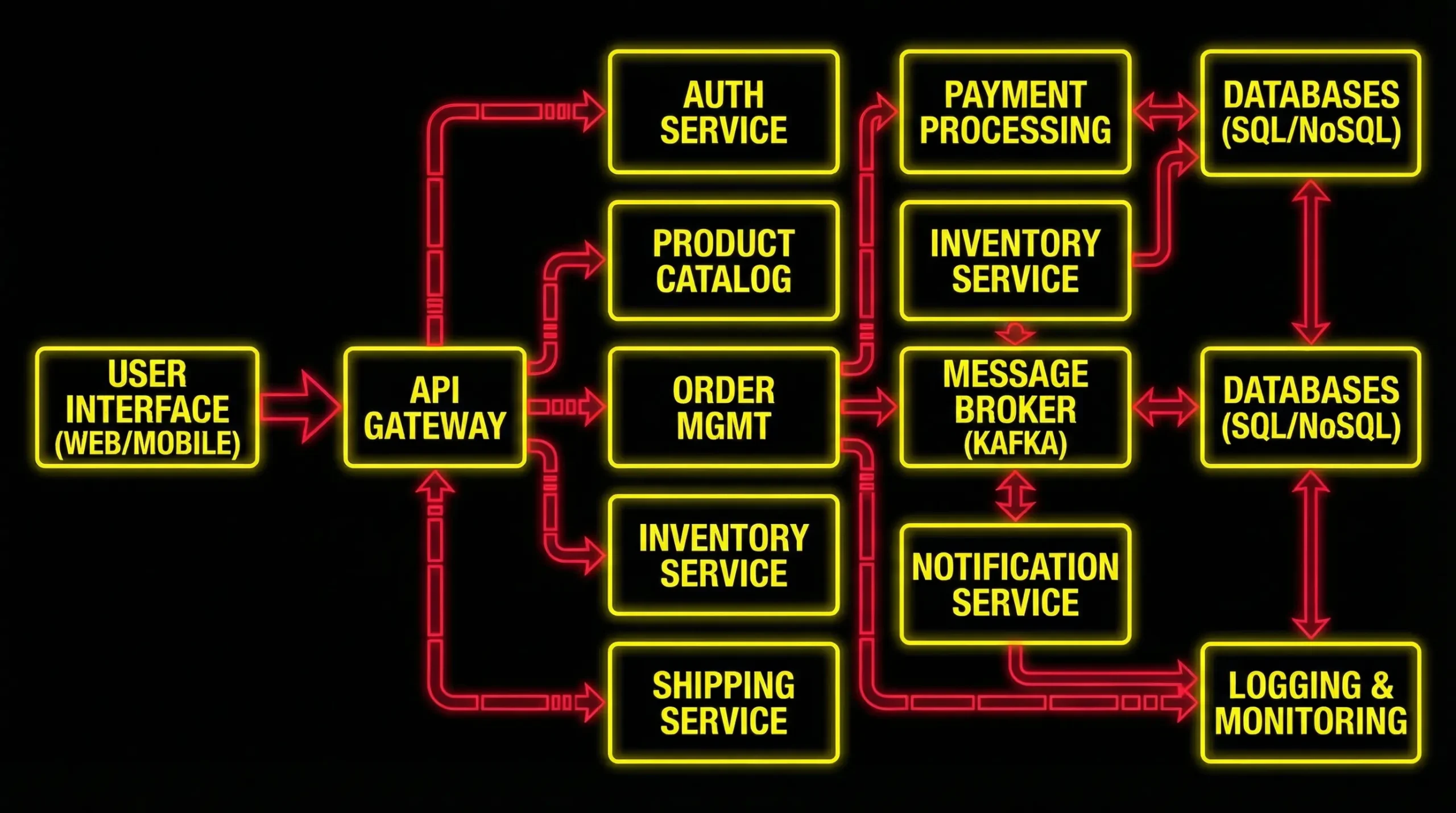
This is the part most people skip when they talk about software. But architecture is everything. It determines how well the software scales, how easy it is to update, and how quickly problems can be fixed when they appear.
Why Mogothrow77 Uses Microservices
How Mogothrow77 software is built at its core comes down to one key architectural choice: microservices. Instead of building one giant program where every feature lives in the same block of code, microservices break the system into smaller independent services. Each service handles one specific task.
Think of it like a restaurant kitchen. One monolithic system is like a single cook doing everything alone. If that cook gets overwhelmed, every order slows down. Microservices are like a full kitchen team where each person has a specific role. If one station slows down, the others keep moving.
This structure makes updates faster, reduces the chance of system-wide failures, and allows the team to scale individual parts of the software without touching everything else.
Modular Design for Long-Term Flexibility
Every component in Mogothrow77 operates independently but communicates through clear APIs. This separation of concerns means a developer can improve the data processing module without touching the user interface. It also means new features can be added without breaking what already works.
Phase Three: Choosing the Tech Stack
The technology stack is the set of programming languages, frameworks, and tools used to build the software. Every choice here has a real consequence on speed, security, and how easy the software is to maintain years later.
Backend Languages and Tools
Python handles data processing and backend services in Mogothrow77. It is fast to work with, flexible, and connects easily with machine learning libraries when AI features are needed. For high-performance system-level tasks, Rust handles the work where low memory usage and speed matter most.
Go is used for building the microservices themselves because it handles concurrent tasks efficiently. And PostgreSQL manages the relational data because it holds up reliably even when things get messy under heavy load.
Frontend and User Interface
On the frontend, JavaScript and TypeScript power the interface. React builds the user-facing components because its component-based structure speeds up development and keeps the UI consistent. Next.js adds server-side rendering for faster load times. Tailwind CSS handles the visual design layer.
For mobile, Flutter allows the same codebase to run cleanly on both Android and iOS without needing to build two separate apps from scratch.
Cloud and Infrastructure
Mogothrow77 runs on cloud infrastructure that supports distributed processing and high availability. Docker containers package each service so it runs the same way in every environment regardless of the machine it sits on. Kubernetes then manages those containers at scale, automatically distributing resources where they are needed.
This combination means the software does not go down during traffic spikes and updates can roll out without taking the whole system offline.
Phase Four: Development and Coding Standards
Architecture is the plan. Development is where that plan gets built. How Mogothrow77 software is built during this phase comes down to discipline and standards that every developer on the team follows.
Agile Development in Two-Week Sprints
The team works in short cycles called sprints. Each sprint lasts roughly two weeks and delivers a functional piece of the software that can actually be tested and reviewed. This approach means problems get caught early instead of piling up until launch day.
Agile teams can improve overall productivity significantly compared to traditional development models where everything is built at once and tested at the end. The reason is simple. Smaller cycles mean faster feedback and faster corrections.
Code Reviews and Git Version Control
No code gets merged into the main branch without a review from at least one other developer. This catches bugs before they become serious problems and keeps the overall quality of the codebase high.
Git tracks every single change made to the code. If something breaks, the team can trace exactly which change caused the problem and roll it back without affecting anything else. Feature branches keep new development isolated so unstable work never touches the live product.
Phase Five: Security Built Into Every Layer
Security in how Mogothrow77 software is built is not something added at the end. It is designed into the system from the very beginning.
Authentication and Data Protection
OAuth2 and OpenID Connect handle user authentication. This means users verify their identity through trusted protocols rather than custom login systems that are easier to exploit. Token-based authentication and role-based access control make sure each user can only access what they are supposed to access.
All data in transit is encrypted using TLS. Secrets like API keys and credentials are stored in a dedicated vault rather than sitting inside the codebase. Regular security audits and penetration testing check for vulnerabilities before they become real risks.
Protection Against Common Attacks
Secure API endpoints prevent unauthorized access from outside the system. Firewalls add another layer of protection. SQL injection and cross-site scripting attacks are defended against through input validation and strict coding practices that treat all incoming data as untrusted until proven otherwise.
Phase Six: Testing Before Anything Ships
A system can look perfect in development and break completely under real-world conditions. Testing is what closes that gap. How Mogothrow77 software is built includes multiple layers of testing at every stage.
Unit tests check individual functions in isolation. Integration tests verify that different modules work correctly when they talk to each other. End-to-end tests simulate real user scenarios from start to finish to make sure complete workflows actually behave the way they should.
Performance testing pushes the system under heavy load to find where it slows down before users ever do. Security testing scans for known vulnerabilities. And manual exploratory testing by QA team members catches the kinds of edge cases that automated scripts tend to miss.
Seventy-two percent of test time in complex builds like this typically goes to edge cases. Things like what happens when the network drops mid-sync. Or what the system does when a local cache gets corrupted. These are the scenarios that break real products in the real world.
Phase Seven: Deployment and CI/CD Pipelines
Getting working software out to users reliably and without downtime is its own challenge. How Mogothrow77 software is built handles this through automated deployment pipelines.
Continuous Integration and Continuous Deployment
Every time a developer commits a code change, the CI system automatically builds the application and runs the full test suite. This gives immediate feedback on whether the new code breaks anything. If tests pass, the deployment pipeline moves the update forward toward production.
Blue-green deployment keeps two parallel environments running at the same time. When an update is ready, traffic switches from one environment to the other instantly. If something goes wrong, the switch reverses just as fast. No downtime. No users affected.
Infrastructure as code tools manage cloud resources through scripts instead of manual configuration. This ensures the development, staging, and production environments are always identical. Differences between environments cause some of the most frustrating bugs in software. Eliminating those differences eliminates a whole category of problems.
Phase Eight: Monitoring and Ongoing Maintenance
Deployment is not the finish line. How Mogothrow77 software is built includes a full monitoring and maintenance layer that runs continuously after the product is live.
Real-Time Performance Monitoring
OpenTelemetry traces every request through the system from the moment it enters the gateway to the moment a response comes back. This means the team can see exactly where slowdowns happen and fix them before users notice a problem.
Logs and analytics tools track usage patterns and surface technical issues. When something goes wrong in production, the team is not guessing. They have data showing exactly what happened and when.
Caching and Load Balancing
Caching stores frequently accessed data so the database does not have to process the same request repeatedly. This reduces server load and speeds up response times for users. Database indexing ensures queries run efficiently even as the volume of stored data grows.
Load balancing distributes incoming traffic across multiple servers so no single machine gets overwhelmed. This is what keeps the software stable during peak usage periods when demand spikes unexpectedly.
What Makes How Mogothrow77 Software Is Built Different
Most software takes shortcuts somewhere. Security gets bolted on at the end. Testing gets cut when deadlines get tight. Architecture decisions get made based on what is trending rather than what actually fits the problem.
Mogothrow77 takes the opposite approach. Security is a structural requirement from day one. Testing happens at every phase not just before release. And architecture decisions are made based on real performance benchmarks and the actual needs of the system.
The result is software that scales cleanly, recovers from errors gracefully, and keeps improving with each update without breaking what already works.
If you want to explore more software breakdowns, performance deep-dives, and tech stack insights like this one, visit techapexlab.com for more content that goes beyond the surface.
FAQ’s
Q1. What programming languages are used in Mogothrow77?
Mogothrow77 uses Python for backend data processing, Go for microservices, Rust for performance-critical low-level tasks, and TypeScript with React for the frontend user interface.
Q2. Why does Mogothrow77 use microservices architecture?
Microservices allow different parts of the system to operate independently. This means updates to one service do not break the others and the system can scale specific components without rebuilding everything from scratch.
Q3. How does Mogothrow77 handle security?
Security is built in from the start through OAuth2 authentication, TLS encryption, role-based access control, and regular penetration testing. API endpoints are secured and credentials are stored in a dedicated vault.
Q4. What testing methods does Mogothrow77 go through before release?
The software goes through unit testing, integration testing, end-to-end testing, performance testing, security testing, and manual QA testing to catch both automated and edge-case issues before anything ships.
Q5. Can Mogothrow77 handle large amounts of data without slowing down?
Yes. The combination of microservices, load balancing, caching, and cloud infrastructure allows Mogothrow77 to process high data volumes while maintaining speed and stability under heavy usage.
Conclusion
Understanding how Mogothrow77 software is built is really about understanding what separates software that lasts from software that falls apart under pressure. The answer is discipline at every phase. Clear planning before a line of code gets written. Architecture that thinks about scale from day one. A tech stack chosen for reliability not trends. Testing that covers the scenarios nobody wants to think about. And deployment and monitoring systems that make sure the work does not end at launch.
Every phase covered in this article connects to every other phase. Weak planning creates architecture problems. Poor architecture makes the tech stack harder to work with. Skipped testing turns into production failures. And missing monitoring means you find out about those failures from your users instead of your systems. How Mogothrow77 software is built gets each of these phases right and that is exactly why it works.

10 Comments
Pingback: how is mogothrow77 software installation
Pingback: Microsoft 365: The Complete Guide for Businesses in 2026
Pingback: How mogothrow77 Software Is Built From Scratch
Pingback: What Is Simpcity? A Complete Guide to the Trending Online Community
Pingback: How Mogothrow77 Software Is Built From Start to Finish
This post 🎯 perfectly explains what I struggled to understand before. Your gift for clarity amazing
Thank you for always bringing fresh ideas to the table
This content speaks to what makes life truly worthwhile and worth celebrating every day
Your dedication is clear
Pingback: How is Mogothrow77 Software Installation Step by Step 2026