
Introduction
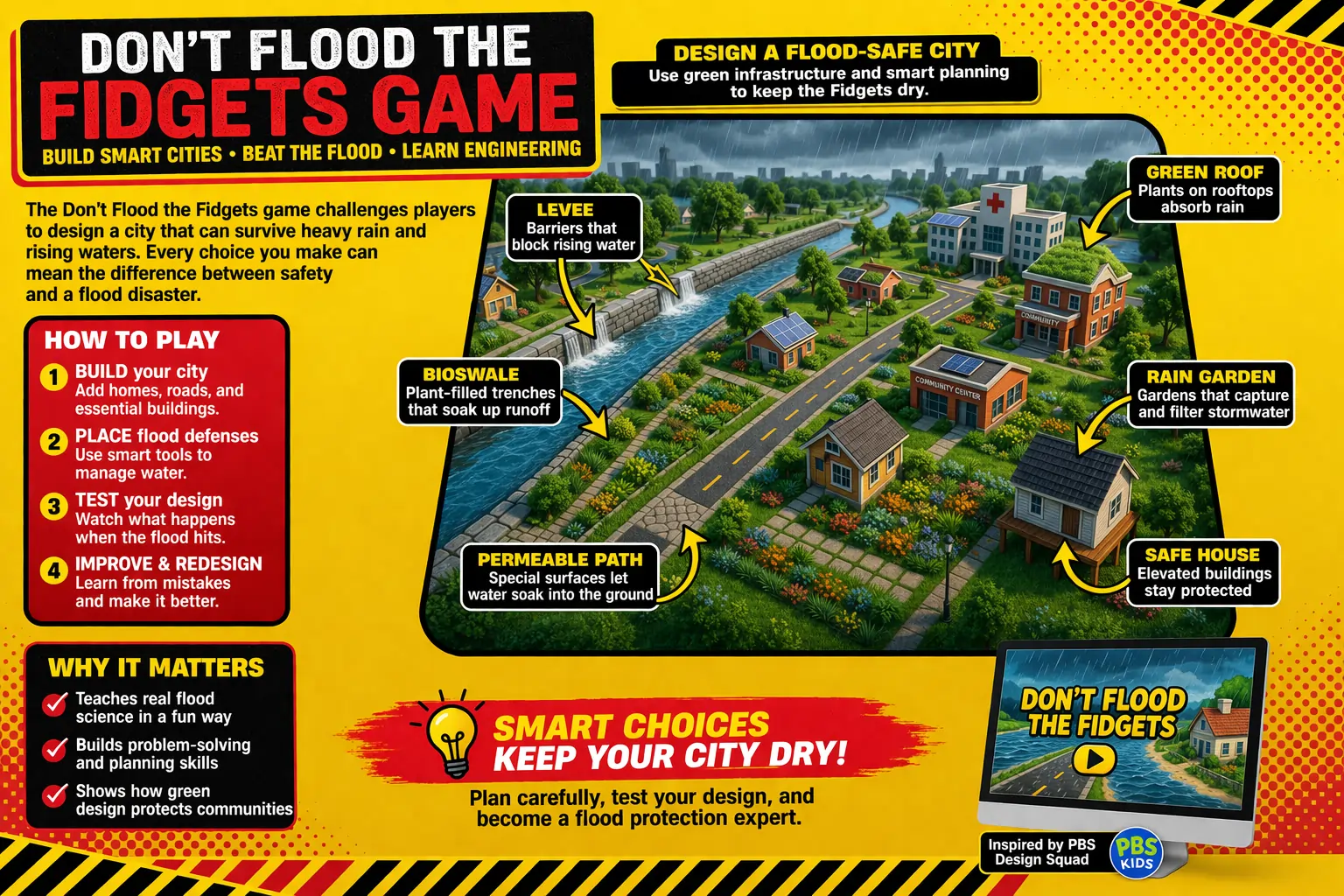
The Don’t Flood the Fidgets game is a flood safety and city design activity that teaches players how engineering choices affect real world flooding problems. Current educational listings describe it as an online game where players build a city that stays safe from floodwater, and some sources also note that PBS no longer supports the game now because of budget cuts.
That makes the Don’t Flood the Fidgets game a strong topic for search because people are usually not looking for entertainment only. They are looking for a quick explanation, a walkthrough, a classroom use case, or a clear answer about how the game works and what it teaches. Educational resource pages also place it in flood science, engineering, and stormwater learning contexts, which makes the intent more informational than casual.
What the Don’t Flood the Fidgets Game Is
At its core, the Don’t Flood the Fidgets game asks the player to design a city for the fictional Fidgits or Fidgets and keep that city dry during flooding. Educational listings describe it as a free PBS Kids resource for grades 3 to 5 and ages 8 to 10, with a clear environmental engineering angle.
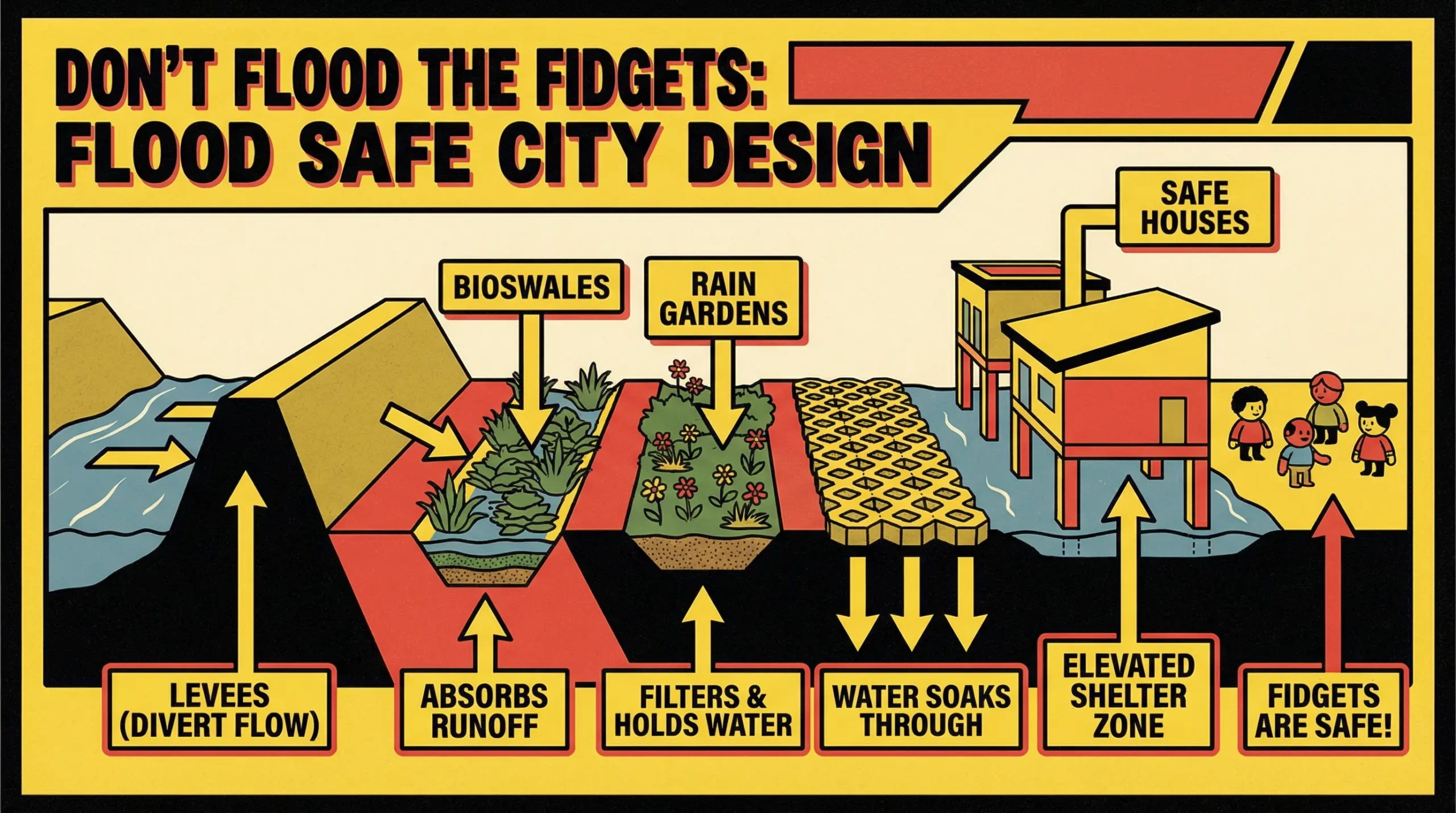
What makes the Don’t Flood the Fidgets game useful is that it does not just ask players to guess. It pushes them to think about how a city should be built, where water will move, and which materials or structures can reduce flood damage. One flood education fact sheet says the game teaches how flooding affects towns and cities, how green infrastructure works, and how levees, bioswales, and permeable surfaces can help prevent flooding.
Why People Search for the Don’t Flood the Fidgets Game
Most people searching for the Don’t Flood the Fidgets game are trying to solve a problem. They may have heard about it from school, a teacher, a lesson plan, or an old PBS reference and now they want to know what it is, how to play it, or whether it still works. That search behavior fits the current mix of search results, which mostly show educational resource pages rather than broad entertainment pages.
Another reason the Don’t Flood the Fidgets game gets searched is that the title appears in more than one spelling. Some pages use Fidgets and others use Fidgits. That spelling variation creates confusion and also creates search opportunity because people often type the title the way they remember it, not the way it was originally written.
How the Don’t Flood the Fidgets Game Works
The Don’t Flood the Fidgets game is built around the engineering design process. A classroom guide from MiTechKids says students build a city, choose materials and community features, flood the city, study the results, and then redesign it two more times based on what they learned. That repeated testing loop is a big reason the game works well for learning.
A science standards resource from the South Carolina Governor’s School for Science and Mathematics describes the Don’t Flood the Fidgets game as an interactive simulation where students design a city with flood safeguards and get three attempts to improve their city. That tells us the game is meant to reward trial, error, and revision instead of one perfect answer.
If you understand the Don’t Flood the Fidgets game in simple terms, it is really a test of planning. You are not only placing objects. You are deciding how a city should handle water flow, where it should be protected, and how to balance safety with the limits of a budget. Educational pages repeatedly describe that same idea in different ways.
What Good Competitor Pages Are Doing
The strongest competitor pages around the Don’t Flood the Fidgets game are mostly short educational resource pages. They do not try to write huge articles. Instead, they give a quick summary, a learning angle, and a direct link or classroom use case. Flood Science Center gives a resource card style description and notes the game is no longer supported by PBS. TryEngineering gives a simple one sentence summary with age group and engineering discipline. CWEP uses a short one line explainer aimed at stormwater education.
That is useful for research, but it leaves a gap. None of those pages fully answer the kind of questions a searcher may still have about the Don’t Flood the Fidgets game, such as how the gameplay feels, what the learning value is, which flood tools matter most, and how to write about it in a way that is easy to scan. That gap is why a longer SEO article can stand out. This is an inference based on the visible structure of the current resource pages.
The Best SEO Angle for This Keyword
The best way to rank for the Don’t Flood the Fidgets game is to write for the person who is already curious but not fully informed. The article should explain what the game is, how it works, why it matters, and what lessons it teaches about flooding and city design. That matches the intent shown by the current search results and the educational sources around the topic.
A strong article should also mention the practical flood concepts that show up again and again in the source material. Those include green roofs, levees, bioswales, permeable surfaces, storm drains, rain gardens, and the basic idea of building smarter before the flood comes. These are the kinds of details that make the Don’t Flood the Fidgets game feel useful rather than repetitive.
Why This Topic Can Still Work for Search
The Don’t Flood the Fidgets game has a helpful mix of search traits. It is specific, it is educational, and it is tied to a recognizable PBS Kids style of learning game. At the same time, it is not heavily covered by long form guides from the main educational pages, which gives a well written article room to add more value. That is a reasonable conclusion from the current search landscape and the source structures we found.
The article should also be written in a friendly, plain style because the Don’t Flood the Fidgets game is mainly searched by people who want quick understanding. Simple language will do better than jargon. Short explanation paragraphs will do better than dense theory. And examples will do better than abstract claims. That recommendation follows the educational tone of the competing pages.
FAQ’s
What is the Don’t Flood the Fidgets game?
The Don’t Flood the Fidgets game is an online flood safety and city design activity from PBS Kids Design Squad. Educational pages describe it as a game where players build a city and try to keep it safe from flooding.
Is the Don’t Flood the Fidgets game still available?
Some education resource pages say that PBS no longer supports the Don’t Flood the Fidgets game because of budget cuts, even though many schools and resource pages still mention it as a learning activity.
What do students learn from the Don’t Flood the Fidgets game?
Students learn how flooding affects towns and cities, how green infrastructure can help, and how design choices like levees, bioswales, storm drains, and permeable surfaces can reduce flood risk.
What age group is the Don’t Flood the Fidgets game for?
Source pages place the Don’t Flood the Fidgets game in grades 3 to 5 and also describe it as suitable for ages 8 to 10.
Why do some pages spell it differently?
The game appears online with both Fidgets and Fidgits in different educational pages. That spelling difference is likely why many people search the Don’t Flood the Fidgets game using both versions. This is an inference based on the mixed spellings in current source pages.
Conclusion
The Don’t Flood the Fidgets game is a strong topic because it combines learning, engineering, flooding, and problem solving in one simple idea. The current web results show that most pages only give a short summary, which means a longer and clearer article can add real value. If the goal is to rank, the best approach is to explain the game in plain English, cover the flood science ideas behind it, and answer the real questions searchers have before they leave the page.
For more SEO and content support, visit Tech Apex Lab.
