
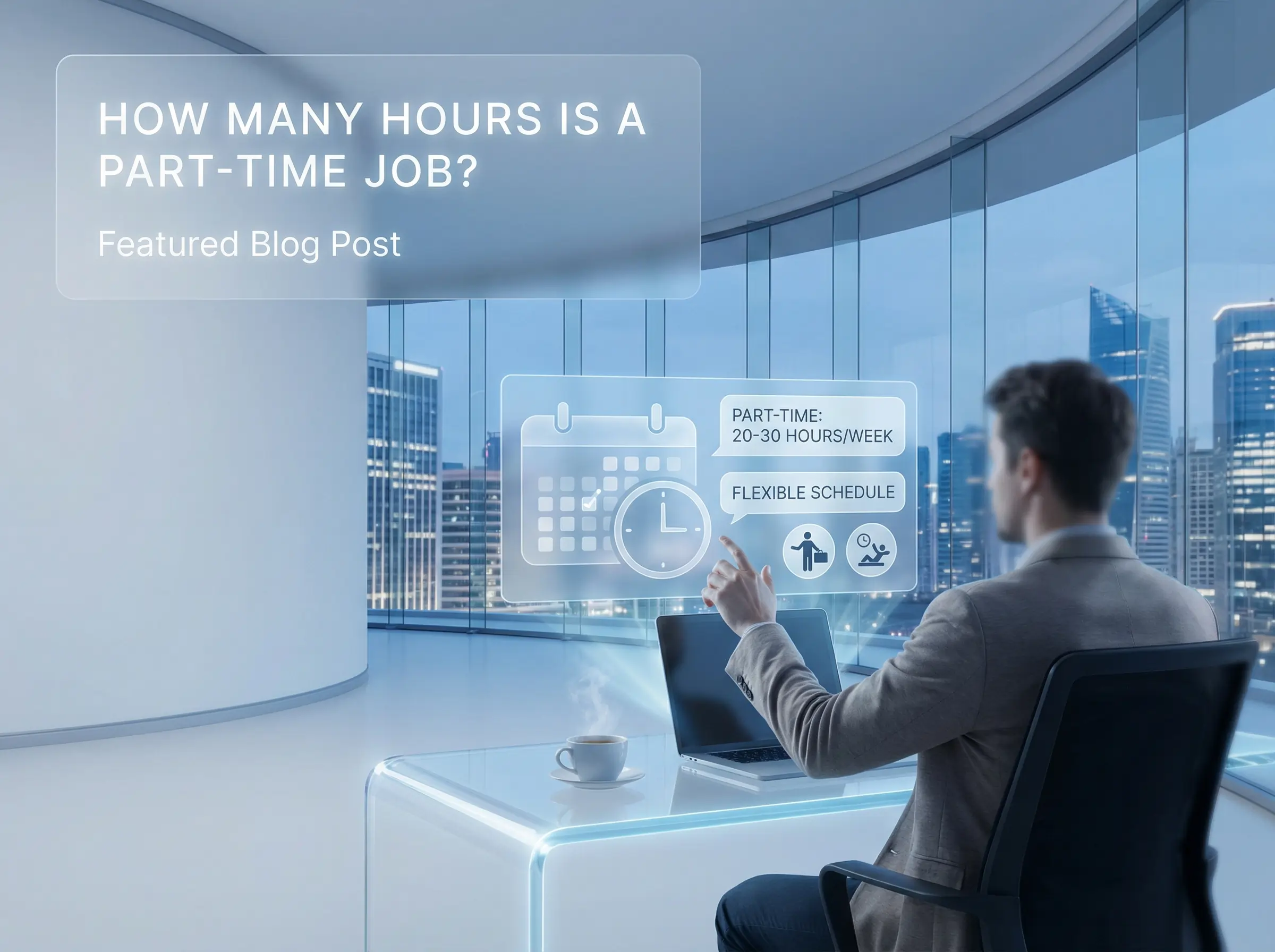
Part-time hours can look simple at first, but once you start hiring or searching for a job, things get confusing fast. How many hours is part-time, and where does it start or end? Many employers rely on part-time workers to handle workload without the cost of full-time staff, yet the rules around hours, benefits, and overtime are not always clear. This guide breaks everything down in a simple way so you understand how part-time work really functions, what counts as part-time hours, and what it means for both employees and employers.
Table of Contents
ToggleWhat Is a Part-Time Job?
A part-time job is a work arrangement where you work fewer hours than a full-time employee. In most workplaces, that means shorter shifts, fewer days, or both. People usually choose part-time employment for extra income, job flexibility, school, caregiving, or better work-life balance.
The part-time job meaning is simple, but the exact setup can change from one employer to another. Some companies use part-time workers for retail jobs, hospitality industry shifts, customer service jobs, or seasonal employment. Others hire part-time employees for office support, freelance work, tutoring, or project-based help.
Part-time vs full-time hours
Part-time vs full-time hours usually comes down to the number of hours worked each week. Full-time employees often work around 40 hours a week, while part-time workers usually work less than that. But there is no single universal rule that fits every company.
A business may call someone part-time at 32 hours, while another may use 25 hours as the line. That is why employee classification matters so much.
How Many Hours Is Considered Part-Time?
How many hours is part-time depends on the employer, the job, and sometimes the law. In many workplaces, part-time jobs range from 1 to 34 hours a week. Some employers keep part-time workers under 30 hours, while others allow a more flexible range.
If you are asking how many hours a week is part-time, the safest answer is this. It is usually anything below a full-time schedule, and full-time is often around 35 to 40 hours weekly. That means 20 hours, 24 hours, 25 hours, or 28 hours can all be considered part-time depending on the company.
How many hours per day is part-time?
How many hours per day is part-time usually depends on the shift pattern. A part-time employee may work 3 to 6 hours a day, or they may work longer shifts on fewer days. Some workers do three 8-hour days, while others do five 4-hour shifts.
So if you are wondering how many hours do part-time employees work per day, there is no fixed number. The schedule is often built around the employer’s needs and the worker’s availability.
Is 25 hours a week part-time?
Yes, in most workplaces 25 hours a week is part-time. It is below a standard full-time schedule and fits the part-time job category in many companies. For students, parents, and people looking for extra income, 25 hours can be a sweet spot because it leaves room for other responsibilities.
Common Types of Part-Time Work Schedules
Part-time hours per week can look very different from one job to another. Some people prefer a steady work schedule, while others need a flexible schedule that changes each week. Both can count as part-time employment.
Fixed shifts
Fixed shifts mean you work the same days and times each week. For example, a person may work Monday, Wednesday, and Friday from 9 a.m. to 2 p.m. This kind of schedule is common in administrative assistant roles, retail jobs, and customer service jobs.
It is easier to plan life around a fixed shift because you know your hours in advance. That makes it a good fit for people who need routine.
Flexible schedule
A flexible schedule gives you more control over when you work. This is common in freelance work, tutor jobs, and some hospitality industry jobs. It can also be useful for workers balancing school, childcare, or another job.
Flexible working hours can be great, but they can also be unpredictable. Some weeks may be busy, and others may be slow.
Seasonal employment
Seasonal employment is another common form of part-time work. Stores, restaurants, and delivery companies often hire extra help during holidays, summer rushes, or special sales periods. These jobs can be ideal if you want short-term income without a long commitment.
Advantages and Disadvantages of Part-Time Jobs
Part-time workers often enjoy more job flexibility than full-time employees. That is one of the biggest reasons people search for part-time jobs in the first place. But the tradeoff is that fewer hours usually means less pay and fewer benefits.
Advantages
A part-time job can give you extra income without taking over your schedule. It can also help you build experience, test out a new field, or stay active in the workforce while managing school or family life.
Many people like part-time jobs because they create room for work-life balance. You may have more time for rest, study, side work, or personal goals.
Disadvantages
The biggest downside is that part-time salary is usually lower than a full-time salary. That can make budgeting harder, especially if your hours change from week to week. Some part-time workers also miss out on employee benefits, paid leave, or health insurance options.
And while the schedule can be lighter, it is not always easier. Some part-time employees still deal with busy shifts, short notice changes, and pressure to cover gaps.
Best Jobs for Part-Time Workers
What jobs are best for part-time workers? The best ones are usually jobs with flexible shifts, clear training, and steady demand. They should also fit your skills and the number of hours you want.
Retail jobs are a common choice because stores often need evening, weekend, and holiday coverage. Hospitality jobs also work well because restaurants, hotels, and cafes often need part-time staff during peak hours. Customer service jobs are another strong option, especially for people who are good on the phone or at handling customers.
Administrative assistant roles can work well if you have office skills and want a stable schedule. Tutor jobs are another smart choice if you know a subject well and want to work around your own availability. Graphic designer work can also be part-time, especially if you take on project-based clients.
The best job is not always the highest paying one. It is the one that fits your life and gives you consistent hours.
Overtime and Part-Time Employees
Do part-time workers get overtime? In many cases, yes, if they work more than the legal threshold for overtime in their workplace. The fact that someone is part-time does not always remove overtime pay rules. What matters is the number of hours worked and whether the worker is nonexempt.
Can part-time employees get overtime pay? Yes, they often can. If a nonexempt employee works beyond the overtime limit set by law, the employer may need to pay extra. This is where nonexempt employees and exempt vs nonexempt status become important.
The Fair Labor Standards Act (FLSA) is one reason people get confused here. Some workers assume part-time means no overtime, but that is not true. Overtime pay rules usually depend on the hour limit, not on whether the worker is full-time or part-time.
Employee Classification Explained
How to classify part-time employees is a big issue for employers and workers alike. Employee classification helps a business decide pay, hours, benefits, and reporting. It also affects whether a worker is seen as a regular employee, a contingent worker, or an independent contractor.
The IRS part-time definition can differ from a company’s internal policy. That is why one employer may call a person part-time while another may treat a similar schedule differently. Employers also have to think about minimum wage law, overtime pay rules, and in some cases health insurance requirements.
The reason classification matters is simple. It changes what the employee gets, what the employer owes, and how the job is managed. If the label is wrong, the business may run into legal or payroll problems later.
Exempt vs nonexempt
Exempt vs nonexempt is about overtime eligibility. Nonexempt employees are usually entitled to overtime pay when they pass the legal threshold. Exempt employees, on the other hand, are usually paid a salary and may not qualify for overtime.
A part-time worker can still be exempt or nonexempt depending on the job duties and pay structure. That is why the title alone does not tell the whole story.
When Does a Part-Time Job Become Full-Time?
When does part-time become full-time? There is no single number used everywhere. In many workplaces, a job starts to look full-time when hours move into the 30 to 40 hour range each week. Some employers treat 30 hours as the shift point, while others use 35 hours.
This matters because a person working 32 or 34 hours may still be called part-time in one company and full-time in another. That is why it helps to check the written policy before you accept the job.
If you are asking, “how many hours is part-time” and trying to plan around benefits or taxes, always look at the employer’s rules first. The title matters less than the actual schedule.
How Part-Time Jobs Affect Benefits
Are part-time employees entitled to benefits? Sometimes yes, but not always. Benefits depend on the employer, the number of hours worked, and the company’s policies. Some part-time workers get limited perks, while others get no benefits at all.
How part-time jobs affect benefits often depends on whether the worker meets a weekly hour requirement. Some employers offer health insurance, paid leave, or retirement access only to employees above a certain threshold. The Affordable Care Act (ACA) also plays a role in how larger employers handle employee benefits eligibility.
Do part-time employees get paid leave? In some workplaces, yes, but it is not guaranteed. Some companies offer paid time off on a reduced scale, while others do not offer it to part-time workers. That is why it is smart to ask before you accept the job.
What rights do part-time employees have? They still have basic workplace rights, including fair pay, safe working conditions, and protection from discrimination. The exact benefits package is different from company to company, but the worker still has legal protections.
Work-life balance and job flexibility
One of the biggest reasons people choose part-time work is work-life balance. A shorter schedule can give you more room for family, study, health, or other income streams. For many workers, that flexibility is worth more than a higher hourly commitment.
Conclusion
A part-time job is not defined by one universal number, but by a shorter schedule than full-time work. In many cases, part-time means fewer than 35 hours a week, with flexible shifts that may change by employer. It can be a strong option if you want extra income, better balance, or a way to fit work around school or family life.
The biggest things to watch are hours, benefits, and overtime rules. Check the job classification before you accept the role, and make sure the schedule fits what you actually need. The next step is simple. Look at the employer’s written policy before you apply or accept the offer.
FAQ’s
Q1. How many hours are in a part-time?
A part-time job usually means working fewer than 35 hours per week, but the exact number can vary by employer. Most part-time workers fall somewhere between 15 to 30 hours depending on the role and schedule.
Q2. What is the minimum hours for part-time?
There is no fixed minimum for part-time hours, since it depends on the company and job type. In some cases, employees may work as little as 3 to 10 hours per week.
Q3. Is 3 hours of work part-time?
Yes, 3 hours of work can still be considered part-time if the employer defines it that way. Short shifts like this are common in flexible or on-demand work schedules.
Q4. Is 20 hours part-time or casual?
20 hours per week is generally considered part-time in most workplaces because it is well below full-time hours. Whether it is casual or not depends on the contract, not just the number of hours.
Q5. How long is a part-time day?
A part-time workday is usually around 3 to 6 hours long, depending on the job and schedule. Some workers may have longer shifts but work fewer days in the week.
