
Introduction
If you’re searching for “how to clean retainers at home,” the answer is simple — you want to clean your retainer the right way without damaging it.
Since your retainer sits inside your mouth all day, bacteria, plaque, and food particles build up on it pretty quickly. Just rinsing it with water or brushing it every now and then isn’t enough. Using the wrong cleaning method can make your retainer look cloudy, cause it to smell bad, or even change its shape over time.
That’s why it’s important to understand how to clean your retainer properly and safely — at home, using simple everyday items.
In this guide, we’ll walk you through:
- What your daily cleaning routine should look like
- How to clean your retainer at home
- The right way to use methods like baking soda and vinegar
- How to get rid of smell and stains
- And the mistakes you need to avoid
If you want your retainer to stay clean, safe, and last a long time — let’s break it all down step by step.
Why Cleaning Your Retainer Matters
Your retainer isn’t just there to keep your teeth straight — it also becomes a part of your mouth’s environment. Every single day, saliva, food particles, and bacteria collect on it. If you ignore this, it doesn’t just lead to bad smell or stains — it can actually create problems for your gums and teeth too.
Main Reasons Why Cleaning Is Important
Bacteria and Plaque Build-Up
Because retainers stay in a moist environment, bacteria and plaque grow on them pretty fast. If you don’t clean your retainer regularly, this can lead to gum inflammation, bad breath, and even tooth decay.
Stains and Smell
Things like coffee, tea, soda, and food particles can stain your retainer easily. Clear retainers are especially noticeable when they’re dirty, and if they’re not cleaned properly, they can develop an unpleasant odor too.
Retainer Durability
Bacteria, sugars, and acids can slowly break down the acrylic or plastic material your retainer is made of. Without regular cleaning, your retainer can warp, crack, or lose its shape — which means you’ll need to replace it sooner and spend more money.
Comfort and Fit
A dirty retainer can cause irritation or soreness inside your mouth. When it’s properly clean, it stays comfortable and continues to apply the right pressure on your teeth.
Quick Example:
Think about it — if you wear your retainer all day and only rinse it, bacteria and plaque start building up in no time. But if you follow a simple daily and weekly cleaning routine, all of these problems can be avoided easily.
Types of Retainers — Know Yours First
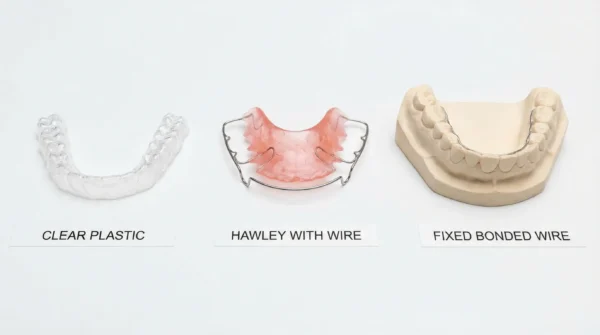
Retainers come in three main types, and the right cleaning routine depends on which type you have.
1. Clear Plastic Retainers
These are thin, transparent trays that fit over your teeth. They’re the most common type, but are sensitive to heat and harsh chemicals.
Tip: Always use lukewarm water and mild soap. Avoid toothpaste and hot water.
2. Hawley Retainers
These have an acrylic plate that fits against the roof of your mouth, with a wire that runs across the front teeth. They’re more durable, but food particles can easily get stuck between the wire and the acrylic.
Tip: Brush gently with a soft brush and use floss or an interdental brush to clean around the wire.
3. Fixed / Bonded Retainers
This is a thin wire that is permanently bonded to the back of your teeth — it doesn’t come out. It needs consistent cleaning since plaque builds up easily between the wire and the teeth.
Tip: Use floss threaders or a water flosser to clean it, and make sure to keep up with regular dental check-ups.
Quick Insight:
Until you know what type of retainer you have, you can’t follow the right cleaning routine. So first, figure out whether you have a clear, Hawley, or fixed retainer.
How to Clean Retainers Daily — Simple At-Home Routine
Your daily cleaning routine should be simple but effective. If you’re only rinsing or brushing occasionally, bacteria and plaque will build up fast. Follow these steps to keep your retainer clean, fresh, and safe every day.
Step 1: Rinse Right After You Take It Out
As soon as you remove your retainer, rinse it under lukewarm water. This removes loose debris and saliva before anything has a chance to dry on it.
Avoid: Hot water — it can warp or deform the plastic.
Step 2: Brush It Gently
Use a soft toothbrush and a mild dish soap to brush your retainer. For clear retainers, skip the toothpaste — it can scratch the surface. For Hawley retainers, be gentle around the wire and the acrylic part.
Step 3: Clean All Surfaces
Brush both the inside and outside surfaces thoroughly. For fixed retainers, use a floss threader or interdental brush to clean around the wire.
Step 4: Rinse Again
Make sure all the soap is completely rinsed off. Then let it air dry or gently pat it with a soft cloth before putting it back in.
Step 5: Store It Safely
Always keep your retainer in its case when you’re not wearing it. A dirty case can also become a source of bacteria, so make sure to clean the case regularly too.
Quick Tip:
Even a quick 10-second rinse right after removing your retainer can prevent a lot of plaque buildup later on. The daily routine is simple — but doing it consistently is what really makes the difference.
How to Clean Retainers Properly — Weekly & Deep Cleaning
Daily cleaning keeps your retainer clean at a basic level, but a weekly deep clean is essential for removing stubborn plaque, tartar, and stains. These steps work for all types of removable retainers.
Step 1: Use Retainer Cleaning Tablets
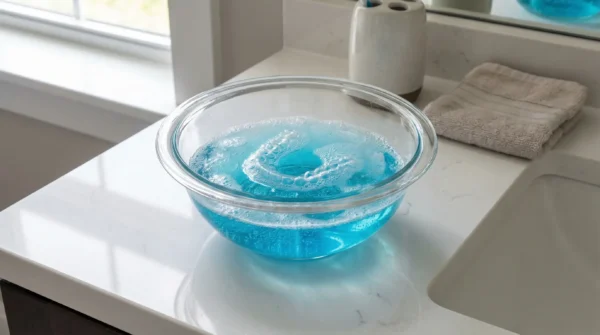
Drop a retainer cleaning tablet into lukewarm water and let your retainer soak for 10–20 minutes. This helps remove bacteria and stubborn buildup.
Tip: Once or twice a week is enough — soaking too often isn’t necessary.
Step 2: Baking Soda Solution
Dissolve 2 tablespoons of baking soda in 3/4 cup of lukewarm water and soak your retainer for 1–2 hours. Baking soda has natural antibacterial properties and is safe for both your retainer and your teeth.
Step 3: Vinegar Solution (Occasional Use)
Soak your retainer in equal parts white vinegar and lukewarm water for 15 minutes. Vinegar helps control bacteria and fungal growth and can remove mild stains.
Important: Don’t soak it for too long — extended exposure to vinegar can damage the acrylic material.
Step 4: Rinse and Dry
After deep cleaning, rinse your retainer thoroughly to make sure no chemical residue is left behind. Use a soft cloth or let it air dry.
Step 5: Ultrasonic Cleaner (Optional)
If you have access to one, ultrasonic retainer cleaners can remove bacteria and plaque in just 2–3 minutes. This is a convenient and fast option, especially if you travel a lot or have a busy schedule.
Pro Tip:
Alternate between the baking soda and vinegar methods on a weekly basis to keep your retainer consistently fresh while minimizing chemical exposure. And remember — deep cleaning only works well when you’re also keeping up with your daily routine.
How to Remove Bad Smell and Stains from Retainers
Even if you clean your retainer every day, bad odor or yellow stains can sometimes still develop. This usually happens because of bacteria, food particles, or long-term discoloration. The good news is that these problems can be fixed pretty easily with the right approach.
1. Remove Odor
- Baking Soda Soak: Mix 2 tablespoons of baking soda with 3/4 cup of lukewarm water and soak your retainer for 1–2 hours.
- Hydrogen Peroxide (Optional): You can also soak it in a 50/50 mix of hydrogen peroxide and water for 10–15 minutes.
- Tip: Sticking to a daily rinse and weekly deep clean can prevent odor from developing in the first place.
2. Remove Stains
- Vinegar + Baking Soda: Mix equal parts vinegar and lukewarm water, add 1–2 tablespoons of baking soda, soak for 15 minutes, and then gently brush.
- Dish Soap & Soft Brush: Use a mild dish soap with a soft toothbrush to scrub the surface and grooves clean.
- Avoid: Toothpaste with abrasives and harsh chemicals — they will scratch your retainer and make it look cloudy.
3. Prevent Future Odor and Stains
- Always store your retainer in its case when you’re not wearing it
- Rinse it immediately after eating strong-smelling foods
- Deep clean it 1–2 times per week without fail
Quick Insight:
Odor and stains usually come from skipping cleanings or storing your retainer incorrectly. If you follow a consistent daily and weekly routine, these issues can almost completely be avoided.
Common Retainer Cleaning Mistakes and How to Avoid Them
A lot of people unknowingly clean their retainer the wrong way, which affects both its lifespan and how well it works. Here are the most common mistakes and how to avoid them.
1. Using Hot or Boiling Water
Hot water can warp or deform plastic and acrylic retainers.
Solution: Always use lukewarm or cool water.
2. Using Toothpaste with Abrasives
Regular toothpaste and whitening products can scratch the surface of your retainer and make it look cloudy over time.
Solution: Stick to mild dish soap or retainer-friendly cleansers.
3. Skipping the Daily Rinse
Not rinsing your retainer after removal allows bacteria and plaque to accumulate quickly.
Solution: A quick 10–15 second rinse every time you take it out is all it takes to prevent this.
4. Using Harsh Chemicals
Bleach, alcohol-based mouthwash, and strong detergents can break down the material of your retainer and are harmful if they come into contact with your mouth.
Solution: Only use gentle, retainer-safe cleaning solutions.
5. Neglecting Fixed Retainer Cleaning
Plaque builds up very easily underneath the wire of a fixed retainer.
Solution: Use floss threaders, interdental brushes, or a water flosser, and keep up with regular dental check-ups.
Quick Tip:
Small mistakes like using toothpaste or hot water can permanently damage your retainer. Maintaining a simple and consistent routine goes a long way in protecting it.
When to Replace Your Retainer or Call Your Orthodontist
Every retainer eventually needs to be replaced or repaired. A lot of people ignore the warning signs, which can lead to teeth shifting or oral health problems down the line.
1. Cracks, Warping, or a Poor Fit
Clear and Hawley retainers can warp or crack from heat exposure or physical stress. If your retainer suddenly feels too loose or too tight, stop wearing it immediately and get it checked by your orthodontist.
2. Persistent Odor or Stains
If bad smell or yellow stains remain even after deep cleaning, the retainer material itself may have deteriorated. A professional evaluation will tell you whether it’s still safe to use or needs to be replaced.
3. Irritation or Gum Sensitivity
Rough edges or a poorly fitting retainer can irritate your cheeks, gums, or tongue. Dental wax can provide temporary relief, but if the discomfort keeps coming back, see your orthodontist.
4. Lost or Damaged Retainer
If your retainer gets lost or damaged, your teeth can start shifting pretty quickly. Always keep a backup retainer if possible, and replace a damaged one as soon as you can.
Quick Insight:
Keeping an eye on your retainer and replacing it on time helps maintain both your teeth alignment and the overall effectiveness of the retainer.
FAQ and Extra Tips for Retainer Care
Here are answers to some common questions, along with extra tips to make your daily and weekly cleaning routine even more effective.
1. Can I Use Mouthwash to Clean My Retainer?
Most standard mouthwashes contain alcohol and harsh chemicals that can damage your retainer. A safer option is to briefly dip it in an alcohol-free mouth rinse, or just stick to your regular daily rinse.
2. How Do I Clean My Retainer While Traveling?
Pack a travel-size soft brush, mild soap, and a small container. Rinse your retainer every time you remove it, and do your deep soak once a week even while you’re on the go.
3. Is Baking Soda Safe for All Retainers?
Yes, it’s safe for both removable and fixed retainers. For fixed retainers, you can use it alongside toothpaste to clean around the wire and remove plaque.
4. How Do I Keep My Retainer Case Clean?
Your case can also harbor bacteria if it’s not cleaned regularly. Wash it with mild soap and lukewarm water once a week, and make sure it’s completely dry before putting your retainer back in.
5. Safe Cleaning Alternatives to Tablets
A mixture of castile soap, lukewarm water, and baking soda works great for keeping your retainer fresh and odor-free. An occasional 15-minute vinegar soak is also a safe option for dealing with stains.
Pro Tip:
The best cleaning routine is one that’s tailored to your specific retainer type — daily rinse, weekly deep clean, and timely replacement when needed. Even when you’re traveling or have a busy schedule, all you really need is a soft brush, mild soap, and your case to keep your retainer safe and fresh.
Conclusion — Keep Your Retainer Clean and Your Smile Healthy
Keeping your retainer clean isn’t just about hygiene — it’s also about protecting your teeth alignment, your oral health, and making your retainer last as long as possible.
Key Takeaways:
- Daily rinsing and gentle brushing keeps your retainer fresh and free of bacteria
- Weekly deep cleaning with baking soda, vinegar, or cleaning tablets removes stubborn stains and odor
- Avoid hot water, abrasive toothpaste, and harsh chemicals to prevent damage
- For fixed retainers, use floss threaders or interdental brushes and keep up with professional check-ups
- Replacing your retainer on time and consulting your orthodontist when needed helps maintain both comfort and effectiveness
If you stay consistent with a safe and simple cleaning routine, your retainer will last longer, stay odor-free, feel comfortable, and continue to keep your teeth in perfect alignment.
